Thursday, August 6, 2026

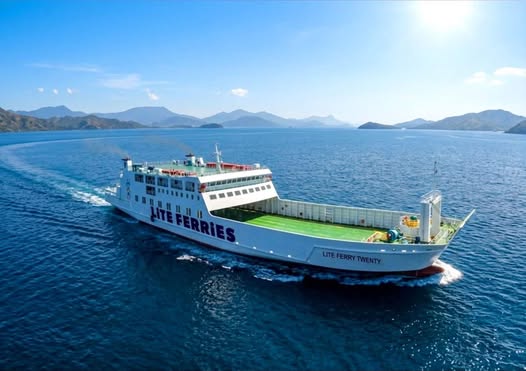
Lite Ferries drops its biggest ship yet, a floating bridge between Luzon and Boracay

BORACAY What started as a Visayas shipping line is now setting national standards. On August 7, 2026, Lite Ferries--“Ang Barkong Bol-anon" inaugurates M/V Lite Ferry Twenty in Caticlan, its largest and newest Ro-Ro vessel yet, a brand-new, China-built Ro-Ro that MARINA just gave "Pioneering Status" for its upgraded service on the busy Batangas–Caticlan corridor.

This isn’t just a new ship. It’s a 90-meter, 3,923-ton floating highway built to move people, trucks, and tourism faster between Luzon and Western Visayas. That means more goods from Batangas markets to Aklan. More balikbayans to Boracay. More jobs moved by sea.


With MARINA’s "Pioneering Status" for the Batangas–Caticlan route, the ship can carry 578 passengers, 30 ten-wheeler trucks, and 4 cars per trip. Think: less waiting, more cargo, more tourists straight to Boracay’s doorstep.


"We’re bridging islands and connecting lives," Lite Ferries said. And with this vessel, they mean it literally.  Built to RINA-Italy standards and completed Jan 2026 in China, the ferry boasts wider halls, better safety, and tourist-class comfort that beats MARINA minimums.


For Lite Ferries, this is milestone #36. The company now serves 36 destinations across 17 provinces and with Lite Ferry Twenty, they’re proving Visayas-born operators can build world-class ships too.


Sailing starts on August 7, 2026 from Caticlan Port.  To Batangas on Mon/Wed/Fri at 6PM and on Sundays at 9AM. To Caticlan on Tue/Thu/Sat at 6PM and on Sundays at 12 midnight.


The 11:00 AM blessing on August 7 is led by local officials including Gov. Jose Enrique Miraflores and Cong. Florencio Miraflores, with officials from MARINA, PCG, and PPA.


"Bridging Islands, Connecting Lives" just got a bigger bridge, said Lite Ferries.Lite Ferries drops its biggest ship yet, a floating bridge between Luzon and Boracay

Monday, August 3, 2026

Cebu champions inclusive disaster resilience for PWDs

LAPU-LAPU CITY — The Cebu Provincial Government gathered local government leaders, national agencies, and disability advocacy groups at the Hoops Dome in Lapu-Lapu City on Friday, July 31, for the Cebu Disability-Inclusive Disaster Risk Reduction (DiDRR) Summit, to bridge the critical gaps that the most vulnerable often face the highest risks in times of crises.

Cebu Governor Pamela Baricuatro emphasized that true disaster resilience requires comprehensive inclusion.  "This reflects our belief that disaster preparedness must include everyone, especially persons with disabilities, who deserve equal protection, participation, and opportunities to lead," Baricuatro stated.

Organized in observance of National Disaster Resilience Month, the landmark event aimed to transform how local disaster risk reduction and management (DRRM) offices approach emergency planning—shifting PWDs from being passive recipients of aid to active leaders in disaster strategy.

Disasters do not affect everyone equally. Globally and locally, PWDs encounter unique, life-threatening hurdles when emergencies strike: From inaccessible evacuation centers and un-adapted early warning systems to physical barriers during emergency evacuations, Persons with Disabilities (PWDs) frequently encounter disproportionate challenges during natural disasters.

Traditional sirens or voice announcements often fail to reach those with hearing impairments, while visual alerts may not aid those with visual disabilities. Standard transport vehicles and evacuation routes rarely accommodate wheelchairs or specialized mobility equipment.

Many temporary shelters lack accessible restrooms, ramps, and dedicated medical support for specialized needs. Without PWD representation in policy design, emergency protocols often overlook crucial necessities like medical devices, service animals, and specialized communication methods.

Addressing these issues directly, the summit focused on embedding disability-inclusive policies into municipal disaster management frameworks, ensuring PWDs are directly involved across all phases: planning, preparedness, response, and recovery.

"Disaster resilience is a continuing responsibility that calls on all of us to remain prepared, work together, and ensure that our people, especially the most vulnerable, are protected," Lapu-Lapu City Mayor Cindi King Chan highlighted the urgency of keeping vulnerable populations front and center in emergency policy decisions.  Chan thanked the provincial government for prioritizing the initiative.

The summit saw strong participation from local leadership and key government agencies, demonstrating a united front toward building more resilient, inclusive communities. Notable officials in attendance included Shalaine Lucero, Regional Director, Department of Social Welfare and Development (DSWD); Manuel Santiago, Mayor of Pilar; Nelin BelciƱa-Tambis, Mayor of Dalaguete; and Verna Magallon, Vice Mayor of Alegria.

By aligning local policies with disability-inclusive standards, the summit marks a decisive step toward ensuring that when the next disaster hits, Cebu's emergency response leaves no one behind. (Photos: Capitol PIO)

Saturday, August 1, 2026

Empowering Visayas entrepreneurs with the economic might of PH franchising

CEBU CITY -- As the Philippine economy continues its steady upward trajectory, the Philippine Franchise Association (PFA) has brought its flagship regional roadshow, the Franchise Negosyo Visayas Expo, to SM Seaside City Cebu, running from July 31 to August 1 at the Mountain Wing Atrium with over 60 exhibitors, industry experts, and hundreds of aspiring entrepreneurs.

Designed as a one-stop hub for business ownership, the free-admission expo featured emerging and established brands, allied suppliers, and hands-on educational seminars covering investment fundamentals, profit scaling, and brand expansion.

"Franchising remains one of the most accessible and proven pathways to business ownership, and through Franchise Negosyo Visayas Expo, we hope to open more doors for Filipinos who dream of building their own enterprise,” said Steve Benitez, President, Philippine Franchise Association (PFA).

The Cebu expo provides a direct platform for attendees to connect with franchisors and explore legitimate, turn-key investment options. Key highlights of the event included a comprehensive brand showcase with more than 60 exhibitors representing food and beverage, non-food retail, and essential service categories.

5 Ways to Grow Your Profit, a practical session led by Coach Camille Conanan of ActionCOACH Philippines on proven strategies to scale existing operations. How to Invest in the Right Franchise, a strategic seminar by Noemi Ruiz of Francorp Philippines guiding prospective franchisees through financial evaluation and brand selection.

How to Franchise Your Business, a targeted forum held at Summit Galleria Cebu tailored for homegrown Visayas brands seeking national and international expansion.

The Philippine franchising industry statistics

The Visayas expo arrives at a high point for the Philippine franchise industry, which has established itself as an economic heavyweight both regionally and globally.

According to the Department of Trade and Industry (DTI) and the International Trade Administration, the Philippines is the 7th largest franchise market in the world and the largest in Southeast Asia. Over 1,800 brands operate across the archipelago, with an impressive 90 percent originating from local Filipino entrepreneurs.

Food and beverage concepts continue to lead the domestic market—accounting for roughly 46 to 80 percent of total industry revenues—followed by services at 34 percent and retail at 20 percent, the report said.  Small-format formats, such as food carts, kiosks, and compact retail pods, have fueled rapid growth in provincial hubs outside Metro Manila, lowering initial capital barriers for first-time business owners.

The sustained rise of franchising in the country is backed by an expanding middle class with growing purchasing power; a strong BPO workforce generating high disposable income and  the rising consumer demand in regional economic hubs like Metro Cebu, Davao, and Iloilo.

Global context: A $900B+ worldwide market

On the international stage, franchising continues to showcase remarkable resilience, transitioning from post-pandemic recovery into steady, tech-driven expansion, bared Chris Lim, CFE, PFA Director for International Relations.

The global franchise ecosystem generates hundreds of billions of dollars in economic output annually, with the International Franchise Association (IFA) projecting global output to surpass $920 billion.

Globally, franchise systems are heavily adopting Agentic AI and automated operations for labor scheduling, inventory control, and localized marketing. Additionally, consumer preferences are shifting toward experiential dining, wellness concepts, and eco-friendly/sustainable brand operations, Lim added.

Cross-border franchising and with International franchisors increasingly view Southeast Asia, and the Philippines in particular, as a primary growth engine due to strong brand recognition, high literacy rates, and social-media-savvy populations, Lim noted.

Benetiz said that events like the Franchise Negosyo Visayas Expo emphasized the crucial role regional centers play in sustaining economic growth. By providing aspiring entrepreneurs in Cebu and neighboring provinces with accessible tools, verified franchisor networks, and expert guidance, the Philippine Franchise Association continues to solidify the country’s standing as Asia’s capital of franchising. (Photos: MBCNewman)
Navigating the waves of reform for PH maritime sector

CEBU CITY — In an archipelagic nation where waterborne transit acts as the country’s economic lifeblood, lawmakers, maritime regulators, and domestic shipping leaders have convened in Cebu on July 31 for a crucial strategy meeting to address pressing industry bottlenecks, overhaul outdated policies, and chart a course toward a safer, more competitive domestic shipping sector.  

The high-level discussions brought together lawmakers from the House Committee on Transportation, senior officials from the Maritime Industry Authority (MARINA), and executive leadership from the Philippine Coastwise Shipping Association (PCSA)—the nation's largest maritime group representing over 50 companies and a fleet of more than 800 vessels, with honored guest, former president Gloria Macapagal-Aroyo, President Emeritus of the organization.

Opening the proceedings, Rep. Reynante Arrogancia, Vice-Chair of the House Committee on Transportation, praised the shipping sector for maintaining fixed shipping volumes, securing 8,000 jobs, and ensuring the continued vitality of the Strong Republic Nautical Highway.

"We do not view ourselves merely as regulators, but as partners in your growth," Arrogancia affirmed, emphasizing that the primary objective of legislative oversight is to streamline policies, address operational bottlenecks, and modernize the domestic fleet.

Echoing these collaborative sentiments, Adm. Loumer Bernabe, MARINA Deputy Administrator for Operations, commended the PCSA for pushing industry standards forward. Bernabe highlighted the need for rigorous maritime safety regulations and accountability, especially in the wake of recent maritime tragedies, noting that safety and economic viability must go hand-in-hand to safeguard national supply chains and food security.

Rep. Franz Pumaren, Chairman of the House Committee on Transportation, outlined an ambitious legislative agenda designed to modernize maritime governance and enhance safety across the archipelago. Key initiatives currently under committee review include:

Pilotage Reform (House Bill No. 5485): Known as the proposed Open Harbor Pilotage Services Act, this bill aims to curb monopolies, prevent conflicts of interest, and establish transparent rates by creating an independent Pilotage Board.  

National Transportation Safety Board (NTSB): Legislation to create an independent investigative body tasked with conducting impartial inquiries into major transport disasters.

Strengthening Maritime Safety: Amendments to the Domestic Shipping Development Act of 2004 to protect passengers, alongside legislative measures to bolster the Philippine Coast Guard (PCG).

Digital Transformation at MARINA: Upgrading agency capabilities for faster crew certification, digital investor registration, and streamlined compliance tracking.

"Safety and competitiveness are catalysts for each other. Reliable operators earn public confidence and attract long-term investment. Regulation must protect the public while encouraging responsible innovation,” said Pumaren.


    PCSA points out regulatory strain and red tape

Despite shared goals for modernization, PCSA President Lucio Lim Jr. presented a candid assessment of the operational crises burdening vessel operators on the ground revealing a critical personnel bottleneck within MARINA staffing shortages, noting the agency currently operates with only 1,200 total staff nationwide—including just 152 qualified inspectors and surveyors—causing severe delays in vessel inspections and documentation processing.

PCSA also criticized redundant Coast Guard clearances policy of physically checking every single vessel prior to departure. Calling the practice inefficient and prone to corruption, Lim advocated for adopting a "master’s code of departure clearance" for cargo vessels to save valuable operational time.

Misapplication of International Conventions, Lim urged regulators to re-evaluate the application of international maritime conventions (such as STCW, MLC, and ISPS) on domestic fleets, pointing out that applying international standards to domestic routes significantly inflates operational costs for local shipowners.

Scrapping the "Rural Terminal Fee".  While praising the efficiency of Roll-on/Roll-off (RoRo) ports for fast inter-island trade, Lim called for the complete abolition of the ₱550 rural terminal fee on freight trucks. Lim noted that terminal fees account for 15% to 25% of total freight costs on short-haul routes, placing Visayas and Mindanao at an economic disadvantage compared to regions served by toll-free national highways.

The meeting concluded with a commitment from congressional leaders to maintain open channels of communication through Technical Working Groups (TWGs) involving port authorities, harbor pilots, shipping operators, and maritime regulators.

By bridging operational realities with legislative policy, both government and private stakeholders aim to build a resilient, modern, and competitive Philippine maritime sector worthy of the commuting public and regional commerce. (Photos: MBCNewman)